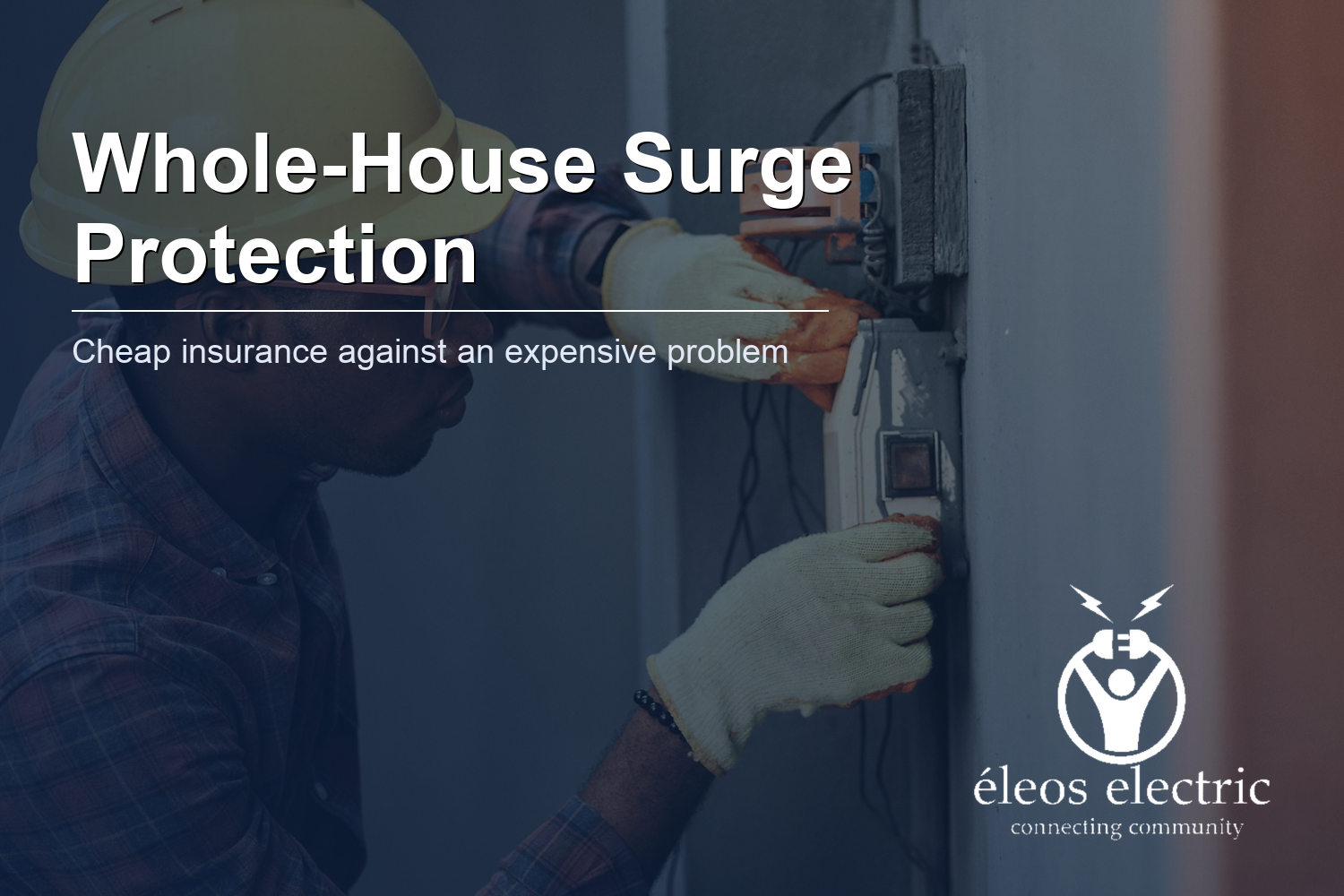
Most homeowners think 'surge protector' and picture the power strip behind the TV. That helps, a little. Real surge protection happens at the panel — and for most Sonoma County homes, it's the cheapest piece of insurance you can install.
What a Type 2 panel-mounted surge protector does
A whole-house SPD (surge protective device) installs at the main panel and clamps voltage spikes that come in through the service drop — lightning, utility events, and the surge that follows a PSPS or outage when power restores. It protects everything downstream of the panel.
What it costs
Installed in an existing panel, a quality Type 2 SPD runs $400–$700 in Sonoma County. New panels often have one integrated. The math is simple: one fried HVAC control board ($800–$2,500) or one dead refrigerator ($1,500+) and the SPD has paid for itself.
What an SPD doesn't do
It doesn't protect against direct lightning to the house — nothing does. It doesn't protect against internal faults or wiring issues. And it can't replace point-of-use surge strips for sensitive electronics — best practice is whole-house SPD plus point-of-use strips for AV and computer gear.
When SPDs fail and how to know
Surge protectors are sacrificial. After a serious surge event, the device may have absorbed it and now needs replacement. Quality units have a status LED — green means active, red or off means it sacrificed itself protecting your house. Check it after any major weather or PSPS event.
Where to install — at the meter or at the panel?
Both options exist. Meter-mounted SPDs (PG&E sometimes offers a paid program) catch surges before they enter the panel. Panel-mounted SPDs are more common and easier to service. We typically recommend a panel-mounted Type 2 device — Eaton CHSPT2ULTRA, Square D HEPD80, or equivalent.
Sonoma County · Since 1990
Talk to a licensed electrician about your surge protection.
Free estimates, same-day response, and a real person on the phone — usually the owner.